Sabtu, 14 Mei 2011

Black Rice is the new Brown


I got a whole lotta love for brown rice, but let’s face it - it is so 2010.
Moving into the now, let’s get a handle on the newest and hottest whole grain to hit the health food store shelves: black rice. Oh yeah.

Some of you may already be familiar with this powerhouse grain, sometimes referred to and sold as “forbidden rice”. Sounds sinful, eh? The reasons behind that could be hearsay, but according to legend, in ancient China consuming black without approval from the proper authorities can have life threatening consequences for those involved. I don’t know about you, but my taste buds are pretty stoked that the black rice prohibition has been lifted and we can all indulge in a little forbidden naughtiness.

Once you go Black...
Black rice is an heirloom variety of rice cultivated in Asia. It is typically sold unmilled with the fiber-rich black husks still intact. It is this outer layer of bran that sets black rice apart from other types of unpolished rice, as the deep, dark pigments that it contains boasts special phytonutrients, called anthocyanins. Anthocyanins are responsible for the reds, blues, purples, and magenta colours also found in blueberries, grapes and açaí, all of which we know to be powerful antioxidant-rich foods. These compounds decrease the risk of heart disease and cancer. They may also aid in the prevention of macular degeneration by protecting the eyes from free radical damage, increasing circulation and stabilizing collagen structures (which hold tissues together).

In addition to its high antioxidant content, black rice has also been shown to help prevent diseases associated with chronic inflammation, such as diabetes, and dampen allergic reactions.

Rice in general is rich in complex carbohydrates, good quality, digestible protein, yet low in fat and calories. Rice aids in digestion, as it is high in dietary fiber (assuming it is not white rice, of course). Rice bran, the husk on the outside of unprocessed rice helps to lower cholesterol, and some studies have shown it may help prevent bowel cancer.

Cookin’ it up
Like other unmilled, unprocessed rice, the black variety takes longer to cook than traditional white rice (yup, get over it). It should also ideally be stored under refrigeration and used within three months, to prevent spoilage. Rinsing and soaking the rice before cooking will help to bring the cooking time down. As a general rule, black rice should be cooked with two cups of water to every one cup of rice, and it will need to cook for 20 to 30 minutes after soaking, or up to 60 minutes if you cook unsoaked rice.

Although the grains appear to be black when uncooked, they are in fact a deep purple-burgundy, which will dye just about everything it comes into contact with. On one hand, this makes it perfect for combining with regular brown rice as it will turn all the grains a lovely colour, but be careful with ceramic or enamel cookware (I totally wrecked my white enamel saucepan!), as well as clothing and countertops. You’ve been warned.


I first tried black rice a few years ago when a good friend of mine gave me a bag for my birthday (my buddies know me so well). I instantly fell in love with its very rich taste, sweet nuttiness and chewy texture. It really is that delicious.
Here I’ve used it to make a delectable and satisfying cold salad, as picnic season is upon us! Black rice is also delicious, and most often used to make puddings and desserts. It is not entirely fluffy in nature, so be aware that you will not end up with a light, airy style of grain. For this reason, I think black rice would be ideal in other savory dishes such as paella or risotto. Give it a shot!

My Black Rice Sesame Salad is incredibly versatile, and with many of the recipes here at My New Roots, I encourage you to just use the vegetables you have on hand in the fridge, or whatever is in season. The dressing provides the background flavour, so mix up the produce to suit your tastes.

Black Rice Sesame Salad
Ingredients:
1 cup uncooked black rice
sea salt
knob of ghee or coconut oil (optional)

1 red pepper, julienned
2 carrots, julienned
5 radishes, sliced into discs
4 green onions, sliced on the diagonal
½ cup chopped cilantro
¼ cup sesame seeds, toasted

Dressing:
1 Tbsp. ginger, minced
2 Tbsp. cold-pressed sesame oil (or olive oil)
2 Tbsp. freshly squeezed lemon juice
1 tsp. tamari
¼ tsp. ground cayenne
1 tsp. liquid honey (or other sweetener)

Directions:
1. Prepare the black rice; you can either soak it overnight for optimal digestion, or simply wash it well 2-3 times, and drain. Place rice in a pot with 2 cups water and a couple pinches of sea salt (add the ghee or coconut oil if you like). Cover with a tight-fitting lid, bring to a boil and reduce to simmer. If you are using soaked rice, check for doneness after 20 minutes, and drain any excess water. Otherwise leave it to cook for 50-60 minutes. The rice should be soft, yet chewy.
2. While the rice is cooking, prepare the dressing. Place all ingredients in a jar and shake well. When the rice is finished cooking, place in a large bowl and pour the dressing over while still warm.
3. Prepare the vegetables. Toast the sesame seeds in a dry skillet until they pop. Remove from heat. Add vegetables and sesame seeds to the rice. Stir well to combine. Season to taste. Store leftovers in the fridge.

Rabu, 11 Mei 2011

ConvertXtoDVD 4.1.19.365 Multilingual


Convert avi to DVD and burn DVD without installation.

Download Portable ConvertXtoDVD Online from RapidShare (0.3 MB)


Extract and run ConvertXtoDVDPortable.

Working folder fixed by user. If you just burn you can fix it in TEMP (deleted when leaving) with WorkingFolder=temp in ConvertXtoDVDPortable.ini. You can also fix it in portable folder with WorkingFolder=portable (the worst on USB key).

Sound events language fixed by launcher according localisation of Windows : English, French, German, Japanese,Spanish.

Settings of installed ConvertXtoDVD should be preserved.

Sabtu, 07 Mei 2011

Sugar Blues? Gluten-free Baking Without Sugar

 Three alternatives to refined white sugar in vegan baking: raw agave nectar, organic brown sugar crystals and unrefined organic cane sugar
Baking gluten-free without sugar: substitutions and tips.

An increasing number of comments and questions have revolved around sugar as a sweetener and how to substitute it in gluten-free baking. I thought the subject sweet enough to deserve its own post.

And since I recently started a sugar detox (I'm on day six sugar-free-, Darlings-- completely- no sweetener except a pinch of the herb stevia in my tea and smoothies), I thought it might be appropriate to refresh this post and bring it forward.

More to come on my sugar detox- soon.

Continue reading

Kamis, 05 Mei 2011

What's all the Buzz About? Bee Pollen.


Oh for the love of bees! Are you as obsessed as I am? Probably not, but I am a little special that way. My passion for bees knows no limits, as the amazing things they produce are infinitely mind-blowing! If you’ve been back in the archives, you’ll know I am a huge raw honey fan, and don’t even get me started on beeswax, but that is only scratching the surface when it comes to the bee products that fill my home, my tummy, and my life.
Let me introduce you to bee pollen. I have wanted to write a post about this for quite some time now because it is one of my absolute favorite superfoods. Not only is it delicious, versatile, and astonishingly inexpensive, but also is oh-so-good-for-you, like times infinity. But let’s start at the beginning, shall we?

What is bee pollen?

First, let’s distinguish between bee pollen form airborne pollen, the latter being the pollen that causes hay fever and other related allergies.

Bee pollen on the other hand is actually the collected pollen that the bees take back from the flowers and store in the hive for food. The bees obtain it by going from flower, scraping the powdery loose pollen from the stamen with their jaws and front legs. They moisten the pollen with a sticky substance secreted from their stomachs so it will adhere to their rear legs. The jagged bristles of their rear legs are used to comb the powder from their coats and front legs. The outsides of their tibias form concave areas used as pollen baskets, into which they press their golden deposits. When each of these baskets is fully loaded, the microscopic dust has been tamped down into a single golden granule – and that is the bee pollen that you can eat!

Why the heck would I want to eat plant sperm collected by bugs?
Because I said so.
But if that doesn’t convince you, how about some concrete reasons?
First off, bee pollen is a super high-energy whole food that supplies us with nearly every single nutrient the human body needs to survive. Wow. Surprisingly, it is very high in protein, containing between 20-35%, including all 22 amino acids.

Bee pollen is loaded with enzymes, something quite lacking in many modern diets. Enzymes are the little compounds that help us break down and digest food, one reason that eating raw foods is so important. Supplementing the diet with bee pollen is excellent all the time, but especially when we’ve been indulging in, ahem, falafels at 2 a.m. on Friday night. I also find it a great travel companion, as I know that I can give my body all the nutrients it needs if I can’t find the all-u-can-eat organic vegetarian buffet at the airport, for example.

And to top it all off, bee pollen is jam-packed with vitamins, minerals, trace minerals, and phytonutrients – I’m telling you, everything! If you were stranded on a dessert island, theoretically, you could survive off the stuff (although I have yet to meet someone who has tested this out).

Allergy Relief
As illogical as it may sound, many people actually experience relief from seasonal allergies by introducing small amounts of fresh, local pollen in to their diet. This could be due to the high levels of quercitin it contains, which is known for its ability to minimize or neutralize the histamine response (I discussed quercitin here). According to the Journal of Allergy, one study of allergy sufferers showed a majority of people with hay fever enjoyed a dramatic improvement after eating bee pollen, while some of the study's participants reported showing a 100% improvement in their condition with supplemental intake of bee pollen.


Okay great, but how does it taste?
The flavour of bee pollen is quite special – I guess I would refer to the taste as floral (go figure). Of course the taste of your bee pollen will depend on where your pollen comes from and the flowers that the bees were dippin’ into.
If you eat bee pollen on its own (which I would encourage at least the first time around), let it dissolve on your tongue to absorb and revel in its amazing complexities of flavour and texture. Mind blowing! And consider the unbelievable concentration of energy that it contains; literally the fertile male element of plant life! Holy cow.

Buying Bee Pollen
Because of its highly concentrated nature, and the fact that it is harvested from flowers, sourcing bee pollen gathered in a pesticide-free environment is important. And it’s also advisable to buy local bee pollen, as it will help to tune your body into your surrounding environment – kind of in line with my “zany” ideas about eating warm food in the winter and cool food in the summer.
Most health food and natural food shops now carry bee pollen. Sometimes it can be found sitting on the shelf right next to the honey, but the best quality bee pollen may be found in the fridge of freezer section of the shop.

Bee pollen comes as small granules in various shades (see photo). One bag from a single source can have a remarkable colour range, which comes from the various flowers the bees collected the pollen from. The granules should be relatively soft (never crunchy!) and dissolve easily on the tongue.
Do not buy bee pollen that comes in tablet form – heating the pollen during compression will destroy its enzymes and vitamin C content. It is a raw food and should be enjoyed as such!

Once purchased, store opened containers of bee pollen in the fridge, and unopened containers in the freezer for the longest shelf life.

The Price is Right

Totally wanting to take supplements, but don’t have the cash? Well, you’ve struck gold with bee pollen, as it’s loaded with the good stuff without the outrageous price tag. Score!

Taking Bee Pollen
Considering it is such very powerful food, it’s best to introduce bee pollen to the body in a responsible manner, (i.e. slowly). Sometimes with supplement and superfoods, we can react in unexpected ways, so it’s best to start off with small amounts and work your way up just to make sure your body is cool with what you’re putting in your mouth.
Adults:
Start with 1 teaspoon, and then increase your intake every day by a few grains until reaching 2 teaspoons a day (10 ml). Daily intake should be a maximum of 1 tablespoon (15 ml).
Children: Start from 3 grains, increasing by 2 grains every few days until reaching 1/2 tsp. a day.

***Note: A small percentage of the population is severely allergic to bee pollen (particularly if you are allergic to bees or other bee products). Please use caution and common sense before introducing this food to your diet.

If you are interested in reading more about the production, medical uses, nutritional values, or are just curious about the life and anatomy of bees, an outstanding source is R. Krell's paper on Value Added Products From Beekeeping published in 1996 - the pollen section is specifically relevant to this post.


I thought I’d start with a simple smoothie recipe to get ya’ll in the mood for pollen, but there are many ways of incorporating these amazing golden granules into your daily diet. Sprinkle it on your morning cereal or lunch-time salad, top your desserts, add to salad dressing, or fold it into your raw food snacks (like The Raw Brownie perhaps?).

Bee Pollen Smoothie
serves 2
1 cup nut milk (or other milk)
1 cup blueberries (frozen are fine)
1 frozen banana, in 3 or 4 chunks
1 Medjool date, pitted (optional)
1 hunk of fresh ginger, peeled and chopped
1 tsp. bee pollen (to start, work up to 1 Tbsp.)

Directions:
1. Put everything in a blender and whir it up! Drink immediately.

You can make your smoothie out of anything you have on hand and/or what is in season – this is simply what I had today!

And yes, that is a glass straw. After all the thought and care I put into buying organic foods, and preparing them in a healthiest way possible, I could not consider slurping my beautiful smoothies through a plastic straw that is potentially leaching harmful toxins. Absolutely not, I say!
Also, glass straws are a far better alternative for the environment, as they are reusable. Those plastic straws, however small, still add up in the landfill.

I bought my glass straw from an artist in Mendocino county (of course) last fall and I am really in love with it. One of those things I constantly told myself I could live without is now something I use almost everyday and get so much pleasure from. You buy them online from many different vendors (just Google glass straws). They aren’t that expensive, and surprisingly durable. Thumbs up!

Am I finished yet? Yes, I am.


source: Haas, Elson M. Staying Healthy with Nutrition. Berkley, CA: Wiley, 2006.
            Jubb, Annie & David. Life Food: Living on Life Force. Berkley, CA: North Atlantic Books, 2003.
           Value-added Products from Bee-keeping: http://www.fao.org/docrep/w0076e/w0076e00.htm#con

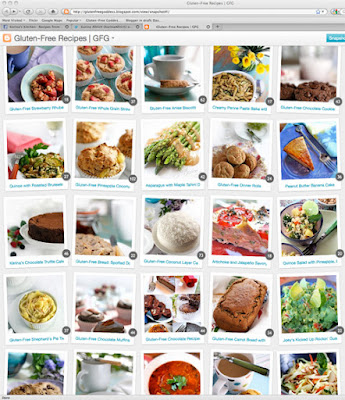
Browse Gluten-Free Recipes Visually

New Blogger Flipboard interface makes browsing gluten-free recipes a visual treat
Browse Gluten-Free Goddess recipes visually.

Today's post will be short and sweet. A gentle nudge to try the new Snapshot browsing view for Gluten-Free Goddess, linked in the left sidebar. Have you tried it yet? I love it. Here's the low down.

Continue reading

Senin, 02 Mei 2011

Meatless Mondays with Martha Stewart - Asparagus Ribbon Salad


Doesn’t the mere sound of it conjure up delightful notions? Asparagus Ribbons. Say it again.
Nice.

This is one of the easiest salads I’ve made in a while – it whips up in no time and the flavour is bang on. Plus, no pots to clean, no hot stove to slave over. It’s a sophisticated-without-being-stuffy spring salad to savour. Enjoy.
Follow me to the recipe.


p.s. – I’ve added a way to subscribe to My New Roots by email. Now you can receive a reminder every time I post something new, and never miss a beat ;)
You will find the sign-up right under the Followers section in the sidebar.